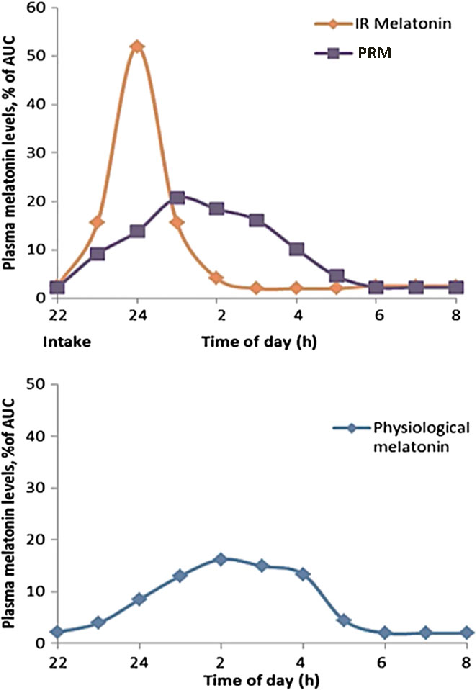
Description
Exogenous melatonin administration influences circadian phase positioning, with the direction and magnitude of phase shifts depending on the timing of administration. Evening doses advance the circadian clock, while morning doses may cause phase delays.
More Figures from This Paper
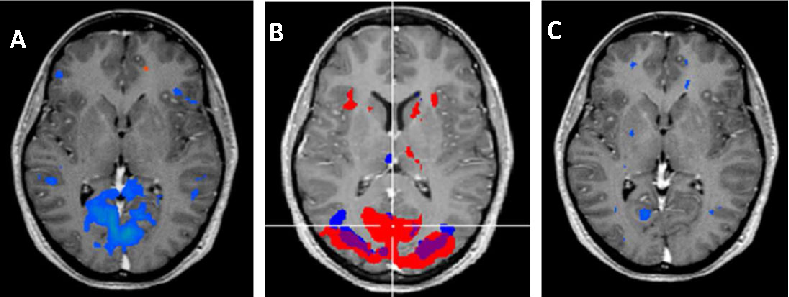
Figure 2
Circadian rhythm regulation involves a complex interplay between the central clock in the suprachiasmatic nuclei and peripheral oscillators throughout the body. Melatonin serves as the primary hormonal signal conveying darkness information to these systems.
diagram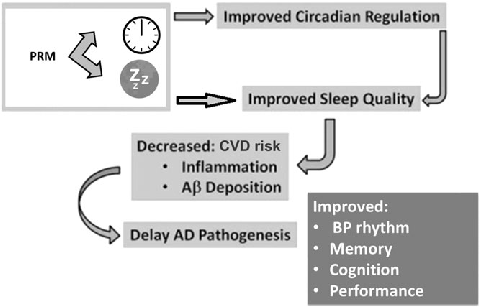
Figure 4
Clinical applications of melatonin extend beyond sleep induction to include circadian rhythm resynchronization in jet lag, shift work disorder, and delayed sleep-wake phase disorder. Dose-response relationships vary across these conditions.
chartFigure 3
ChartSource Paper
New perspectives on the role of melatonin in human sleep, circadian rhythms and their regulation.Cite This Figure
 > Source: Nava Zisapel "New perspectives on the role of melatonin in human sleep, circadian rhythms and ." *British journal of pharmacology*, 2018. PMID: [29318587](https://pubmed.ncbi.nlm.nih.gov/29318587/)
<figure>
  <img src="https://pdfs.citedhealth.com/figures/29318587/92.png" alt="Exogenous melatonin administration influences circadian phase positioning, with the direction and magnitude of phase shifts depending on the timing of administration. Evening doses advance the circadian clock, while morning doses may cause phase delays." />
  <figcaption>Figure 3. Exogenous melatonin administration influences circadian phase positioning, with the direction and magnitude of phase shifts depending on the timing of administration. Evening doses advance the circadian clock, while morning doses may cause phase delays.<br>  Source: Nava Zisapel "New perspectives on the role of melatonin in human sleep, circadian rhythms and ." <em>British journal of pharmacology</em>, 2018. PMID: <a href="https://pubmed.ncbi.nlm.nih.gov/29318587/">29318587</a></figcaption>
</figure>