Beschreibung
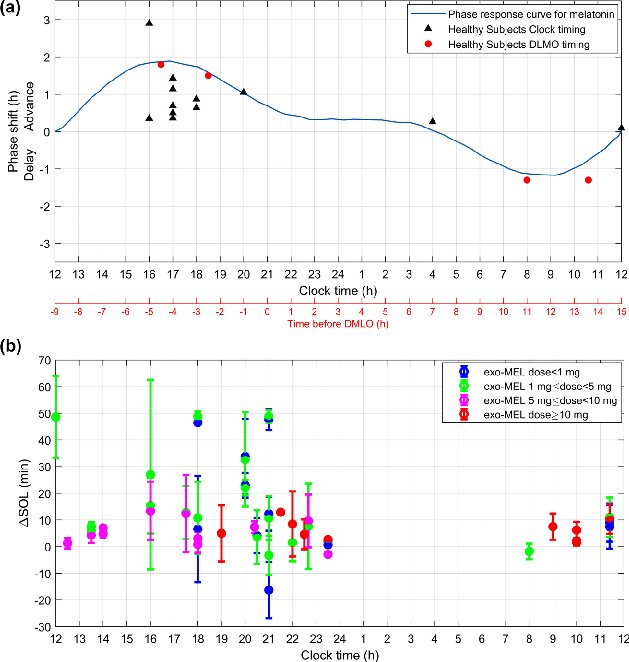
Dose-response analysis of melatonin supplementation on sleep parameters, indicating that lower physiological doses may be as effective as higher pharmacological doses for circadian rhythm regulation.
More Figures from This Paper
Figure 3
Forest plot showing melatonin's effect on total sleep time across included studies. The overall effect suggests a small increase in sleep duration, with considerable heterogeneity between studies.
forest_plot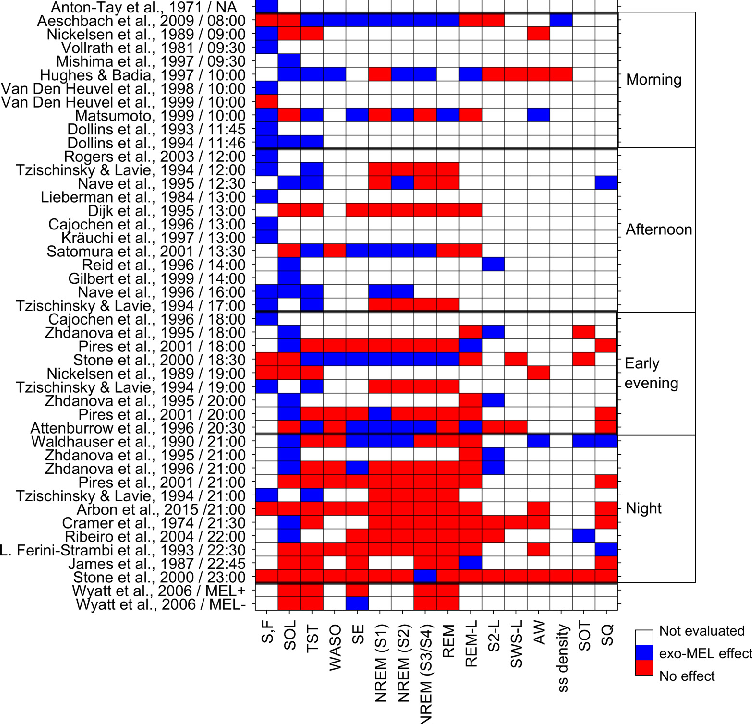
Figure 5
Circadian phase-response curve for exogenous melatonin, demonstrating how timing of administration determines whether it advances or delays the circadian clock.
chartFigure 4
Chart
629 × 662px
· 112,2 KB
Source Paper
Melatonin as a Chronobiotic with Sleep-promoting Properties.Cite This Figure
 > Source: Francy Cruz-Sanabria et al. "Melatonin as a Chronobiotic with Sleep-promoting Properties.." *Current neuropharmacology*, 2023. PMID: [35176989](https://pubmed.ncbi.nlm.nih.gov/35176989/)
<figure>
  <img src="https://pdfs.citedhealth.com/figures/35176989/2253.png" alt="Dose-response analysis of melatonin supplementation on sleep parameters, indicating that lower physiological doses may be as effective as higher pharmacological doses for circadian rhythm regulation." />
  <figcaption>Figure 4. Dose-response analysis of melatonin supplementation on sleep parameters, indicating that lower physiological doses may be as effective as higher pharmacological doses for circadian rhythm regulation.<br>  Source: Francy Cruz-Sanabria et al. "Melatonin as a Chronobiotic with Sleep-promoting Properties.." <em>Current neuropharmacology</em>, 2023. PMID: <a href="https://pubmed.ncbi.nlm.nih.gov/35176989/">35176989</a></figcaption>
</figure>